Do all electronics need anti-static foam?
No. Some electronics only need protective cushioning, while sensitive components may require anti-static or conductive materials.
Electronics packaging can require static-control foam in addition to normal cushioning. Anti-static foam inserts and conductive foam trays help organize boards, sensors, modules, IC-related assemblies, test parts, and repair kits where ordinary packaging foam may not be suitable.
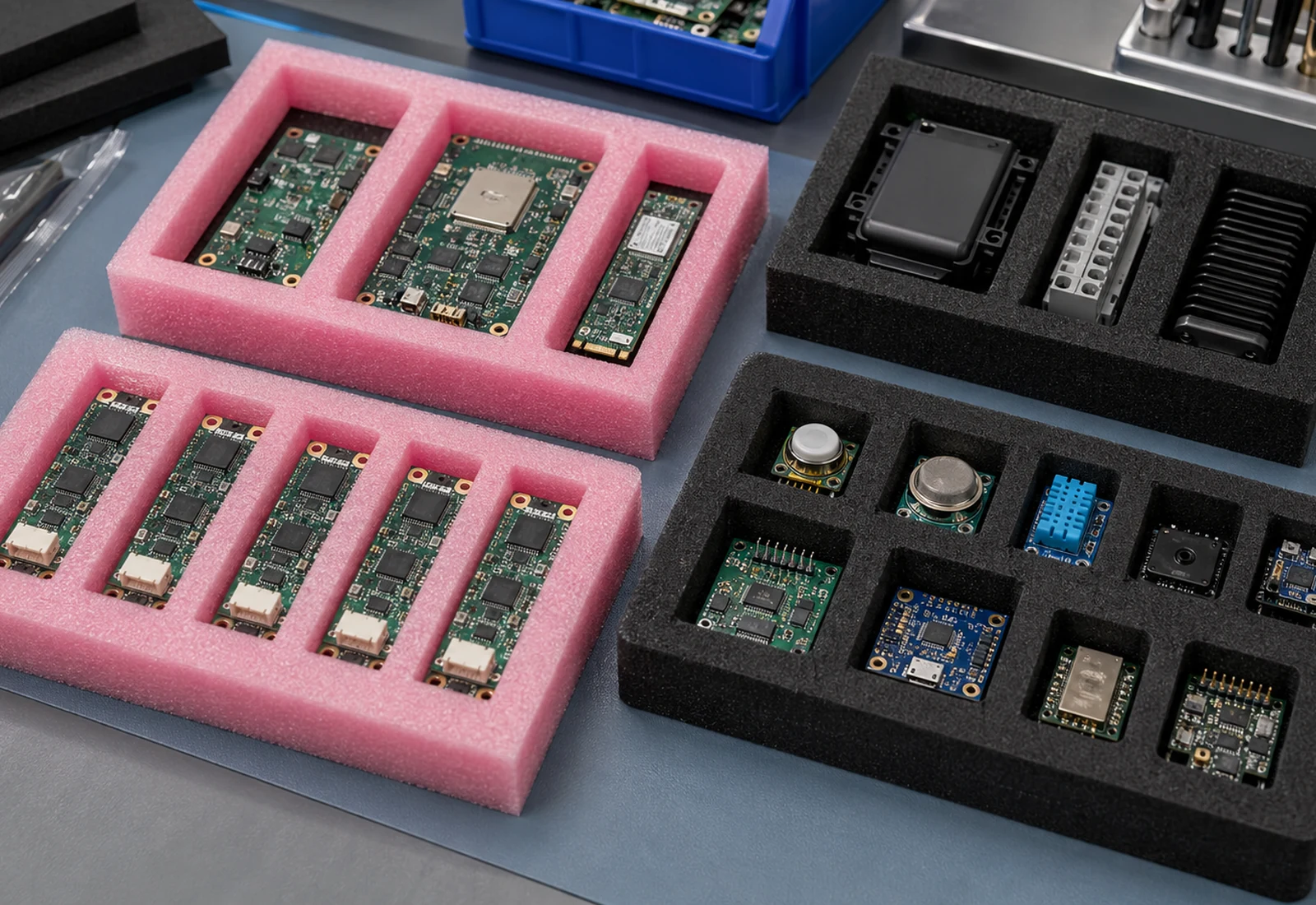
Anti-static and conductive foam are not the same. Buyers should confirm the required protection level with their engineering or quality team before ordering. If you already have a resistance requirement, standard, or approved material grade, include it with the RFQ.
Electronics trays need enough clearance for components, connectors, and soldered areas. Foam should not press on fragile parts. For production trays, repeatable loading direction, row spacing, labeling, and easy counting can be as important as cushioning.
Send component dimensions, board photos, required static-control level, quantity, tray size, packaging size, and whether the insert is for shipping, work-in-process handling, sample kits, or long-term storage.
No. Some electronics only need protective cushioning, while sensitive components may require anti-static or conductive materials.
Yes, material color depends on the selected foam type and availability.
Yes. The cavity can be designed to support safer areas and avoid pressure on delicate parts.
Photos, drawings, and product weight help us recommend foam type, cavity design, and a practical sample route.