Is EVA better than PE foam?
EVA is often better for presentation and clean case inserts. PE is often better for durable industrial protection. The right answer depends on the project.
EVA and PE are both popular closed-cell foam options, but they do not feel or perform the same in every project. The best choice depends on appearance, stiffness, durability, cost target, product weight, and how the insert will be handled.
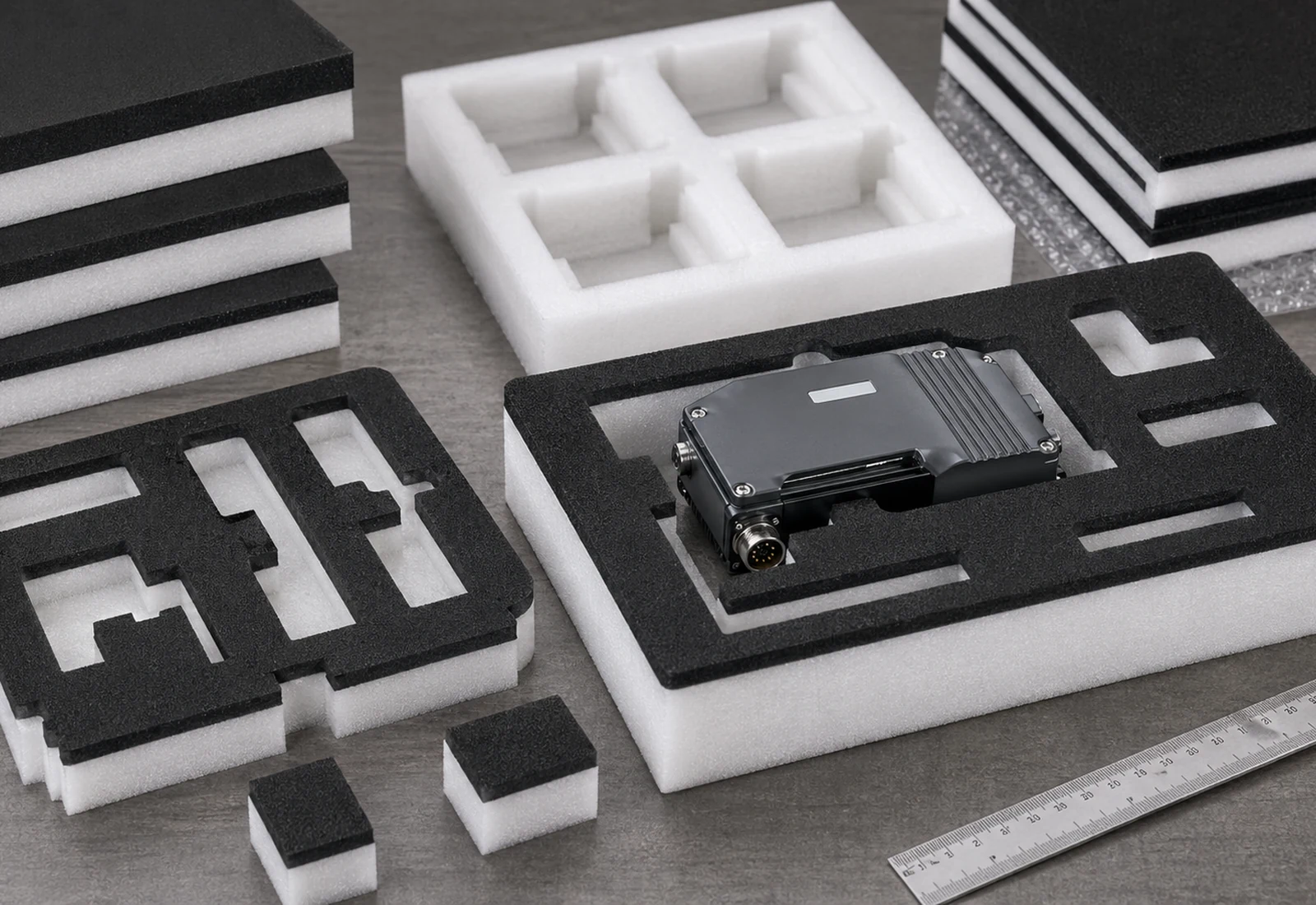
Choose EVA when the insert needs a clean, premium look, sharp cavity edges, two-color tool control, or a polished presentation inside a case. EVA is common for sales kits, tool drawers, instrument cases, camera cases, and retail-style presentation packaging.
Choose PE foam when durability, closed-cell protection, moisture resistance, and repeated industrial handling matter more than a premium surface look. PE can be practical for reusable trays, industrial devices, heavy products, and export packaging that needs stable support.
Neither material is automatically cheapest or best. Density, thickness, color, cutting method, quantity, and lamination all affect price. A low-density foam may save cost but fail under heavy products, while a denser foam may improve fit and durability.
Send product weight, case size, use environment, appearance target, quantity, and photos. We can recommend EVA, PE, PU, or a layered combination when a single material is not ideal.
EVA is often better for presentation and clean case inserts. PE is often better for durable industrial protection. The right answer depends on the project.
Yes. Multi-material or multi-density structures can be quoted when the design requires it.
Two-color EVA is common for tool control because the contrast layer makes missing tools visible.
Photos, drawings, and product weight help us recommend foam type, cavity design, and a practical sample route.