Is die cutting cheaper than CNC?
For repeatable shapes and suitable quantities, die cutting can lower unit cost after tooling.
Die cut foam inserts are useful when a project needs repeatable shapes, stable cost, and efficient production after the design is confirmed. Die cutting can be used for packaging pads, cavity inserts, dividers, gaskets, trays, and high-volume foam components.
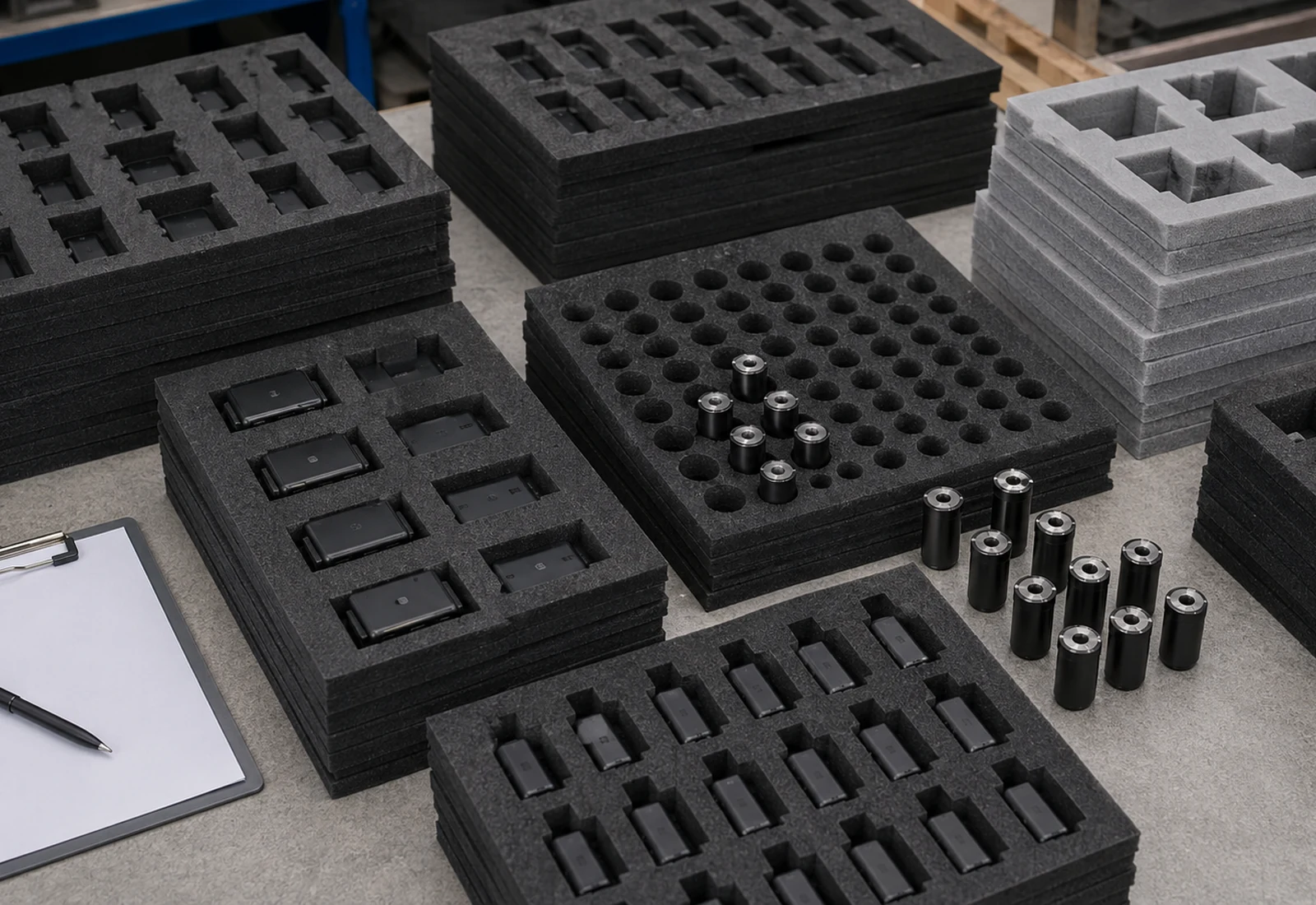
Die cutting is often selected when the shape is repeatable and quantity justifies tooling. It can reduce unit cost compared with slow one-by-one cutting, especially for flat pads, repeated cavity layers, and packaging components that do not require deep 3D routing.
CNC cutting is flexible for prototypes and complex cavities. Die cutting is often better for repeat production of approved shapes. Many projects start with CNC samples, then move to die cutting when dimensions, material, and quantity are stable.
Tool cost, foam thickness, tolerances, cavity spacing, and material compression should be reviewed before production. For multi-layer inserts, each layer may need its own cutting plan.
For repeatable shapes and suitable quantities, die cutting can lower unit cost after tooling.
Deep routed pockets are usually better suited to CNC or layered construction.
Yes. Adhesive backing can be added for many foam parts depending on material and application.
Photos, drawings, and product weight help us recommend foam type, cavity design, and a practical sample route.