Is EVA waterproof?
EVA has closed-cell characteristics and resists moisture better than open-cell PU foam, but final performance depends on grade and use conditions.
EVA foam is one of the most popular materials for custom case inserts because it has a clean surface, good resilience, stable cutting edges, and a professional appearance. It is often selected when the insert must protect the product and also look organized when a buyer opens the case.
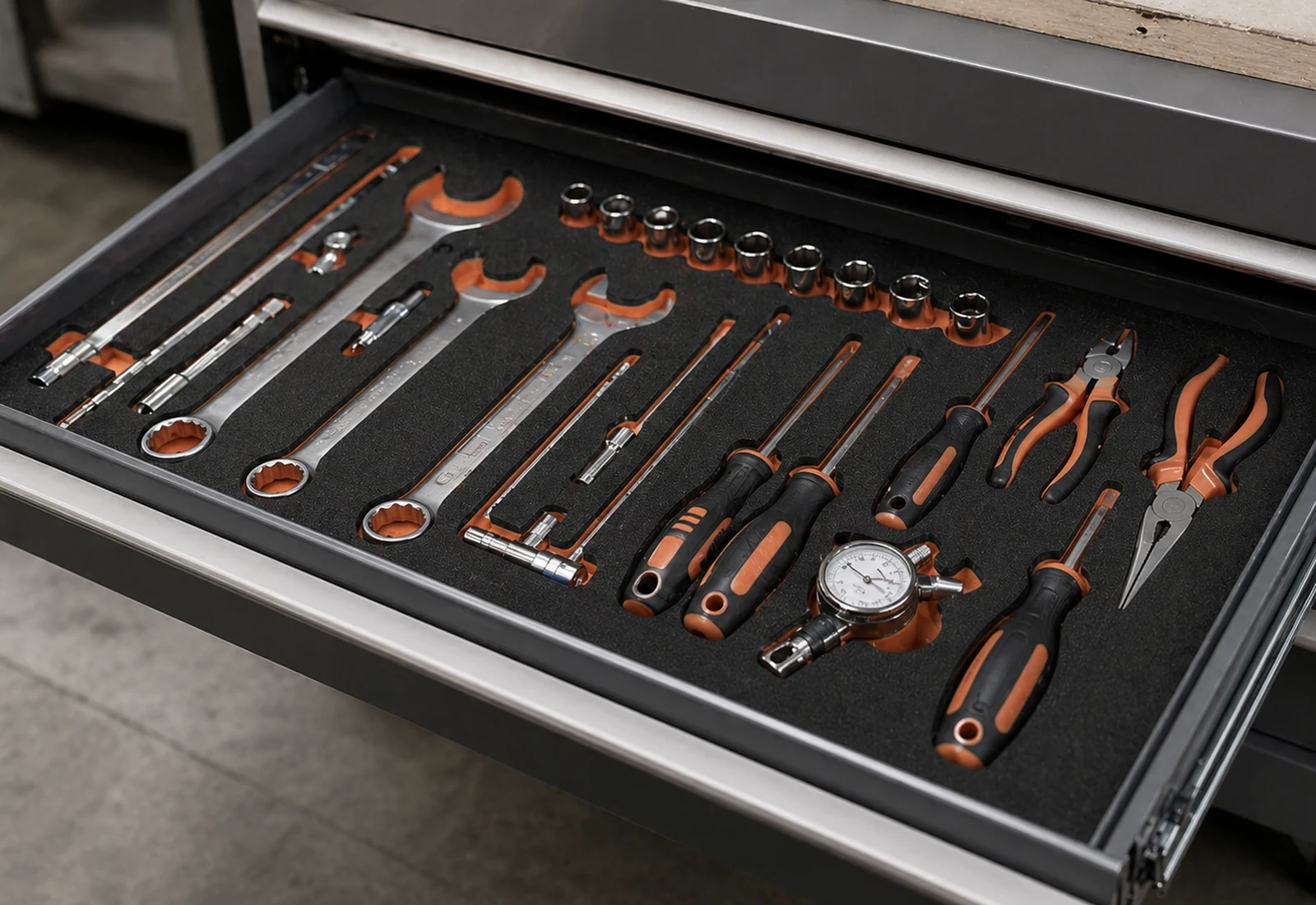
EVA feels firmer and cleaner than many soft packaging foams. It is useful when the insert needs to hold shape, resist repeated handling, and present a premium product. Layered EVA can create contrasting colors, removable plugs, stepped cavities, and finger access cuts.
EVA foam inserts are commonly used for tool kits, measurement equipment, electronics, camera accessories, microphones, beauty devices, sales sample kits, premium packaging, emergency kits, and organized storage trays.
For EVA foam, cavity tolerance, part weight, removal direction, and case clearance matter. A beautiful insert can still fail if parts are hard to remove or rub against the lid. We review product fit, cavity spacing, and finger access before production.
EVA has closed-cell characteristics and resists moisture better than open-cell PU foam, but final performance depends on grade and use conditions.
Some EVA can be cut by laser, but CNC and die cutting are often preferred for cleaner production and lower odor risk.
Yes. Layered EVA is commonly used for tool control and presentation inserts.
Photos, drawings, and product weight help us recommend foam type, cavity design, and a practical sample route.