1. RFQ and material direction
Send product dimensions, case or box size, photos, quantity, foam preference, color, and target application. If you do not know the material, explain the product weight, fragility, and appearance requirement.
2. Layout and quotation
We review foam type, thickness, cavity design, cutting method, quantity, and packing. For many projects, a drawing or layout suggestion can be prepared before sampling.
3. Sampling
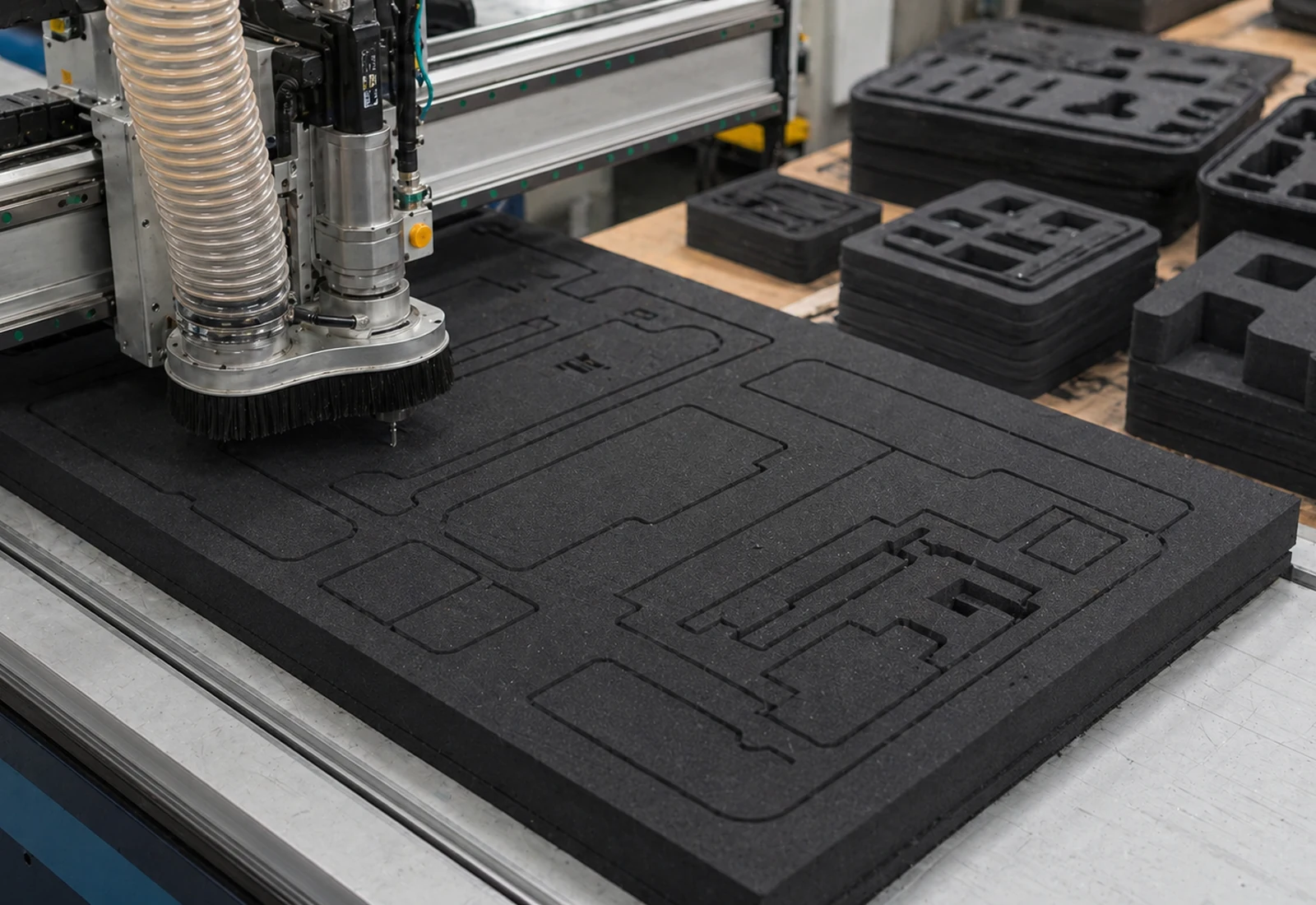
CNC cutting is useful for prototypes and small batches. Sampling checks product fit, removal comfort, lid clearance, cavity depth, and surface appearance.
4. Production and QC
Production can include CNC cutting, die cutting, lamination, routing, adhesive backing, and packing. QC focuses on dimensions, material, cavity accuracy, edge quality, quantity, and packaging condition.
5. Export packing
Foam inserts are packed to reduce compression, contamination, and deformation during shipment. Carton size and packing method depend on foam type and order quantity.
6. Repeat orders
After a sample is approved, keep the drawing, material, density, color, and packing specification consistent. Repeat orders can move faster when the approved sample and part number are referenced instead of restarting the layout from photos.
CNC or die cut decision
CNC cutting is usually the most flexible route for prototypes, small batches, and complex cavities. Die cutting can improve repeat efficiency when the design is stable. Some projects use both: CNC for deep or detailed work, die cutting for repeated flat layers.
Communication checklist
The fastest projects have one owner on the buyer side, clear dimensions, marked drawings, a quantity range, and a target delivery window. If any detail is unknown, explain the product use and we can recommend the next most practical step.