Can you recommend foam density?
Yes. Send product weight, dimensions, use case, and target appearance.
Foam density affects support, compression, edge finish, product retention, and cost. A density that feels good in hand may still be wrong if the product is heavy, fragile, sharp-edged, or repeatedly removed from the insert.
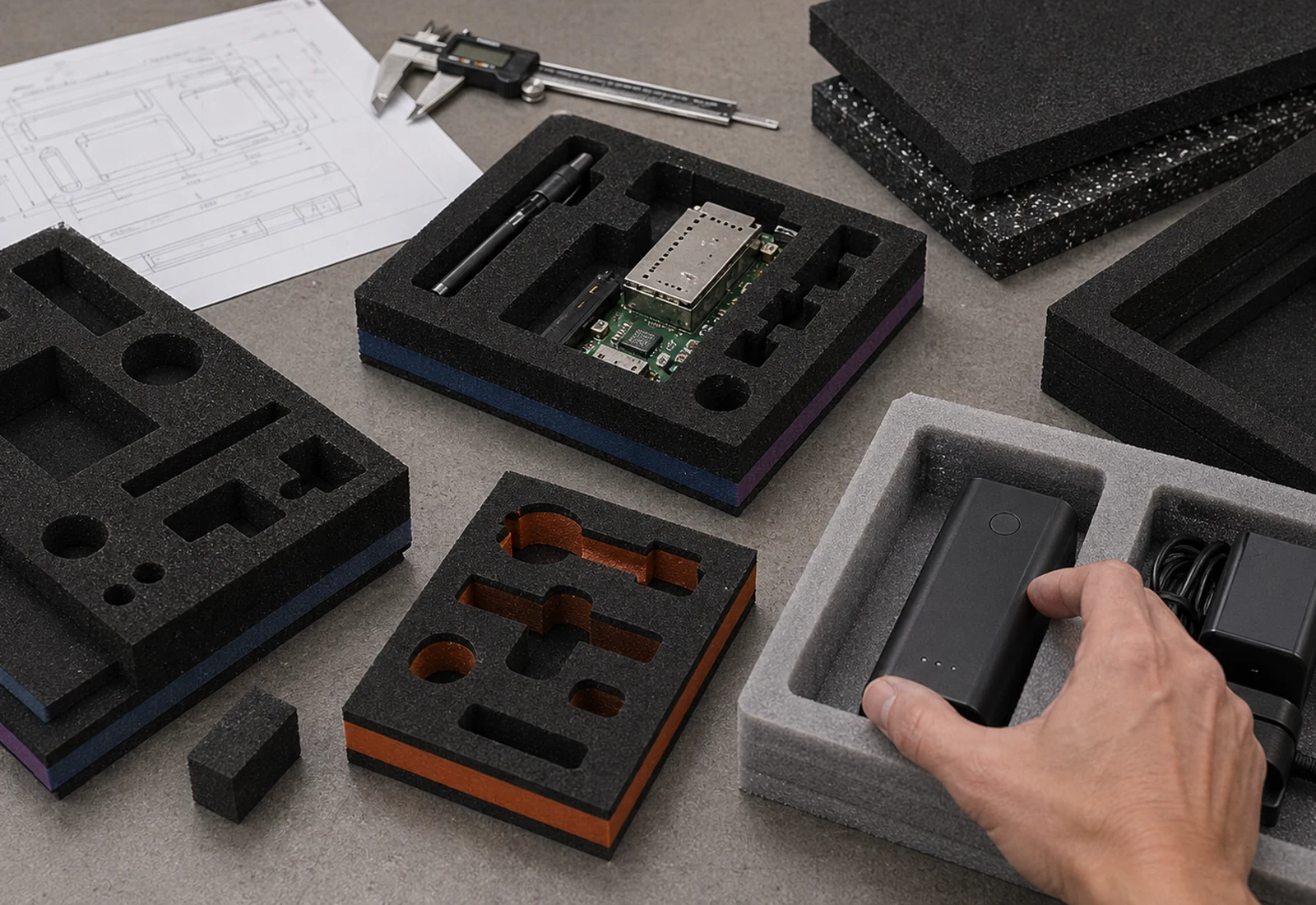
Material type, cell structure, thickness, cavity depth, product weight, and contact area all affect performance. Two foams with similar density can still feel different if they are EVA, PE, PU, or EPE.
Small heavy parts can crush soft foam if the load is concentrated in a narrow cavity. Larger support areas, stepped pockets, firmer layers, or denser foam can improve stability. Fragile surfaces may need softer contact or a lid foam design that avoids pressure points.
A tight cavity can make a product feel secure, but it may also slow packing or frustrate users. Finger cutouts, relief space, and cavity depth should be planned together with density so the product is held without being trapped.
For new products, a CNC-cut sample helps confirm density, removal comfort, lid pressure, and edge appearance. This is especially important for instruments, camera gear, electronics, and reusable cases.
Yes. Send product weight, dimensions, use case, and target appearance.
No. Higher density gives more support, but fragile products may need softer contact or more space.
Yes. Samples are recommended when density and fit are important.
Photos, drawings, and product weight help us recommend foam type, cavity design, and a practical sample route.