Can you do small batches?
Often yes, especially with CNC-cut foam, but MOQ depends on material and project scope.
MOQ and lead time depend on material, cutting route, foam thickness, quantity, tooling, sample approval, and packing. A prototype request has a different path than a repeat die-cut production order.
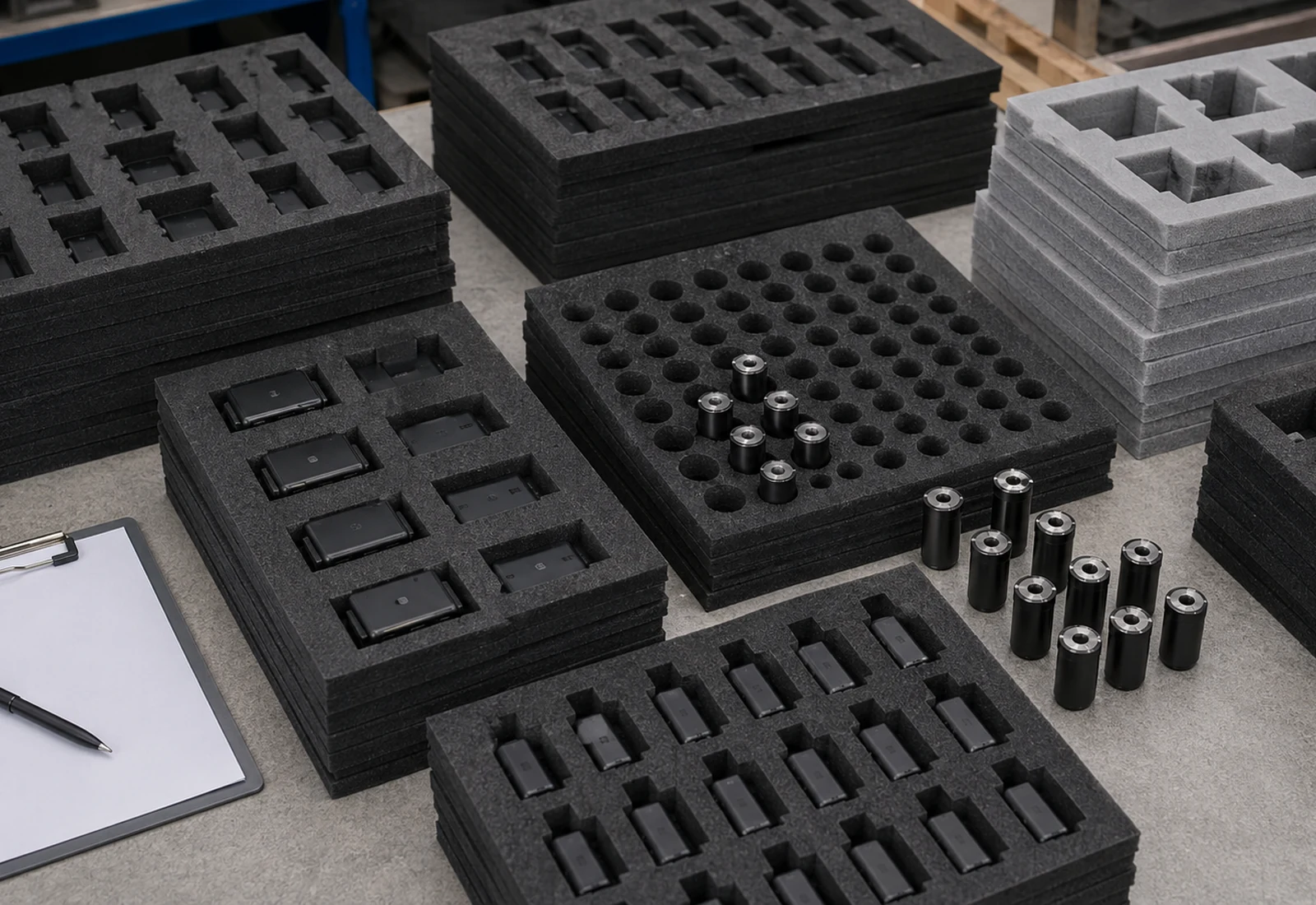
Small CNC-cut samples are often possible when material is available. The main timing factors are drawing clarity, product dimensions, case size, and whether a layout needs to be created from scratch.
For stable shapes and larger quantities, die cutting or combined processes may improve efficiency. Tooling time, sample approval, material procurement, and packing requirements all affect lead time.
Custom colors, unusual densities, special anti-static requirements, laminated layers, adhesive backing, large sheets, or supplier minimums can raise MOQ. Standard black EVA or common PE/PU materials are usually easier to quote.
Send the quantity range, target delivery date, product dimensions, case size, foam color, and photos or drawings. If price is more important than appearance, say that clearly so the material recommendation can match the target.
Often yes, especially with CNC-cut foam, but MOQ depends on material and project scope.
Usually yes. Tooling can make sense when the shape and quantity are stable.
Material availability, drawing clarity, sample approval, tooling, and order quantity.
Photos, drawings, and product weight help us recommend foam type, cavity design, and a practical sample route.